 In August, 2016, we discussed the idea of “broken windows” contributing to overall decline in civil society. Basically, the “broken windows” concept is that if little issues are ignored they will lead to big issues. “Broken windows” became well known as a policing concept applied in New York City.
In our previous discussion, Eddie Settles and Ken Welch basically endorsed the “broken windows’ concept and, therefore, fell in the camp of believing little violations of civility should be addressed before they grow into major problems.
After the discussion, Ken Welch recalled past conversations with others about private property, what rights people had to use and maintain their own property as they saw fit, whether residential or commercial property, so long as the property or its use did not directly, physically, infringe on another person’s property or public property. He found he was conflicted.
So in this conversation, we revisit the “broken windows” concept of government oversight of property uses/condition, discussing the rights of private property owners. We further delve into the public laws generally as they affect behavior and the logic society may apply in both legal and personal relations.
Duration: 33 minutes, 3 seconds
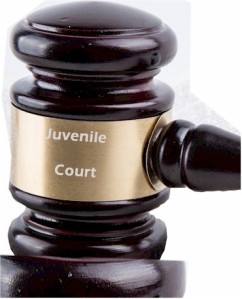 inors. A minor is anyone under the age of 18, however, state law gives juvenile courts jurisdiction to to age 19 for someone who has come under its jurisdiction as a minor under age 18. Shelby County Juvenile Court Judge Dan H. Michael is proposing to the Tennessee General Assembly that Juvenile Courts retain jurisdiction of a minor with a case in juvenile court until that person turns 25 years old, adding six years to the court’s oversight of a young offender. Judge Michael has asked the Shelby County Commission to support his proposal.
 It does not take long on the streets of Memphis to see someone commit a civil violation. In fact, in just a few minutes one is likely to see a multitude of violations. Automobile drivers speeding, property owners failing to meet the requirements imposed by building and property codes, littering, and more. Are these minor issues without much consequence? Or are they a gateway or invitation to more serious violations, including criminal behavior? Are “minor” violations of civil rules a detriment a civil society. That is the topic of this edition of A Memphis Conversation.
 icians and governmental institutions, but non-profit agencies and other people and entities that are in a position to provide leadership. Many identify poverty as the primary problem in Memphis. In this discussion, it is suggested that those in poverty may be pawns of others who use them for political power and financial gain. Furthermore, that given the governmental and private financial resources devoted to the issue of poverty, that it could be the main business of Memphis, a business which some may wish to sustain for their own benefit. The question is raised as to which type of organization may be in the best position to truly address the problem of poverty in our city and are those in top positions in those organizations the ones who should continue in those roles.
 A Memphis Conversation